

Breaking Free from Mediocrity: Parenting Lessons from Gene Key 8
On raising children outside the system, finding our own style, and nurturing their wild uniqueness.

🌱 This post is part of my ongoing series exploring child-related insights from the Gene Keys. Here I share my contemplations on Gene Key 8 — Mediocrity, Style, and Exquisiteness — with reflections on how it speaks to consciously raising children and nurturing their natural learning and development. Quotes from Richard Rudd’s Gene Keys book appear in italics.
For those of us treading an alternative path, it can be easy to believe we’re raising free-thinking children. But if we haven’t faced our own fears or stepped onto the path of following our own dreams, can we really claim to be doing so?
This piece is inspired by Gene Key 8, from Richard Rudd’s 64 Gene Keys, a profound system for unlocking the higher purpose hidden in our DNA. I quote the book throughout this article.
Mediocrity and the Education System
The 8th Gene Key begins with the shadow of Mediocrity — a state in which lives are lived in the false security of sameness, where difference is feared.
“Only when life forces you to grow, through some kind of crisis or the death of a loved one, for example, do you come to experience your true nature outside the borders of this comfort zone.”
When I first read this Gene Key, I felt both blown away and validated. Because Rudd points the finger directly at where this mediocrity is most deeply ingrained: in the education of children.
“Most educational systems encourage sameness rather than difference because difference threatens the system itself. In modern education, young children go through an accepted process of tests and examinations, the very nature of which is to regurgitate memorised information with little or no scope for spontaneous innovation. This indoctrination begins in your early childhood and lasts into your early twenties as you are cycled through the same system that shaped your parents and your parents’ parents. By setting up a system where sameness is the rule, we have successfully turned individuals into outsiders and reactionaries.”
For most home educators, this is familiar ground — often the driving force for choosing a different path in the first place. Yet it raises a deeper question: even when we remove our children from the system, how much mediocrity still lives in us?
The Conditioning We Carry
I know this shadow personally. I’ve always felt a spark of the reactionary — the black sheep in school, work, and wider society. But for much of my life it’s been only an ember, flaring up occasionally (like when I refused to enforce masks as a Speech & Language Therapist in 2020 — a story for another day). Still, more often than not, I defaulted to the system’s agenda, towing the line and swimming in the sea of mediocrity.
Now, I’m determined to live differently for my children. Even if I have many layers left to shed, at least I am aware of the shadow — and that awareness is a start.
But what does it really mean to raise a child as an individual, not a cog in the wheel?
Beyond School, Beyond Education?
Choosing not to send them to school is a massive first step. But what comes next? If we recreate school at home, follow a curriculum, or even guide our children towards ‘sources of truth or knowledge,’ are we still sending the same message: learn this so you know what everyone else knows, and think what everyone else thinks about it?
Unschoolers may already recognise this and allow their children to self-direct their learning, question ‘sources,’ and develop critical thinking. I find myself leaning more towards this camp. At the same time, I’ve often noticed my discomfort with always framing what we’re doing in relation to school. And perhaps that’s what leads me, again and again, to pause and wonder: what do we really mean when we speak of ‘education’?
If children grow naturally, supported by conscious, attentive parents who guide them in their own unfolding — isn’t that enough? What is this “education” we’ve been taught to idolise? How does it differ from attuned parenting that honours a child’s innate gifts, interests, and timing?
What do children truly need to know? And whenever we impose something on them, aren’t we reinforcing sameness?
Richard Rudd asks the same radical question:
“Is formal education really needed at all? In our modern world, the inflexibility inherent in our educational system is becoming more and more of a problem. Naturally there will always be certain children who show a disposition for formal learning — some in a variety of subjects and others in specific subjects. However, many other children simply do not need a formal education and certainly do not respond well to one.”
This is the heart of my work now. Every child comes into the world with their own unique essence — a blend of strengths, sensitivities, and natural propensities. What we call “education” seems designed for the fully left-brained child who thrives on structure and curriculum. Yet more and more children are arriving who are wired differently. Among them, those with strong elements of 'rightness' in their design often find formal education not only unnecessary, but actively restrictive or even harmful.
The Fear of Being Different
The shadow of mediocrity is so deeply ingrained it must be consciously “unlearned later in life if you are to have the least chance of living out your gifts and finding your genius.”
Underlying it is the fear of difference:
“Without this stereotypical facade, who might you be and how would others approach you?”
Mediocrity exists to keep a lid on out-of-the-box thinking and to keep people functioning as machinery of society. We love stories of people who break free to follow their dreams — but how many of us actually do it? Even as home educators, how many of us still live mediocre lives, following the dictates of outside authorities, working jobs that keep us small, or adopting others’ methods in parenting?
If we want our children to step outside the system, we must do the same. Our children will mirror our courage — or our fear.
Style: The Gift of Gene Key 8
The higher expression of this key is the Gift of Style:
“The Gift of Style has little to do with our popular interpretation of this word — it has more to do with following your own unique rebellious spirit out into the world. True style cannot be measured by materialistic trappings nor can it be faked. It is the natural flowering of your individuality. To find your own style is to be yourself without concern about what others may think… Individuals manifesting this Gift have surrendered themselves to a creative process that controls them, rather than them controlling it.”
I know this initiation intimately. Every group, job, or relationship I’ve ever had has brought the same painful but liberating choice: assert my individuality, or lose myself. Whether it was turning off mass media, speaking against inhumane practices, or walking away from jobs and friendships that wanted me to “play the game,” I’ve felt the danger and exhilaration of choosing my own path.
“Style is dangerous to society and its logical structured system-based thinking and infrastructure. It is dangerous because it mimics nature, which so many systems try to control and explain… individual uniqueness is usually confined to those realms like art, fashion or music where it is acceptable and where there is some space for it to breathe. In most other spheres of society, individual style is generally suppressed because it is neither trusted nor understood.”
This is where the Gene Key strikes home: am I brave enough to raise my children in their own wild uniqueness?
Raising the Wild Ones
The truth is, our nature is wildness. And yet, like every parent, I feel the pressures of conformity. Well-meaning relatives ask if my daughter is “on track,” if she is “where she should be.” But measured against what? Sameness is the only yardstick we know. Throw it away, and we’re left with no map — no certainty of what children “should” look like, now or in the future.
Even as more people acknowledge the brokenness of schooling, few can yet imagine a true alternative. And those of us trying to live differently are still a tiny minority.
“Until a collective coalesces made up of individuals who are free thinkers, the 8th Gift of Style will remain on the fringes of society. In the meantime, anyone who breaks out of the lower frequencies of the Shadow states will have to confront the spectre of a collective that cannot allow individual freethinkers much leeway.”
That future collective excites me. I hope my children find others like them as they grow — and help form part of that coalescing. As I claim my own style and freedom, it’s inspiring to imagine my children carrying this wild, transformative energy forward.
At its highest frequency, the 8th Gene Key flowers into Exquisiteness:
“All systems break down under this wild, ebullient energy that comes straight from the source of creation.”
For now, my work is to keep stripping away my conditioning — the people-pleasing, the fitting in — and fully embody my style. To follow my dreams (I am much closer now, having stepped off the carousel of employment to embrace my passions and my creativity). To connect with others daring to raise children outside the system.
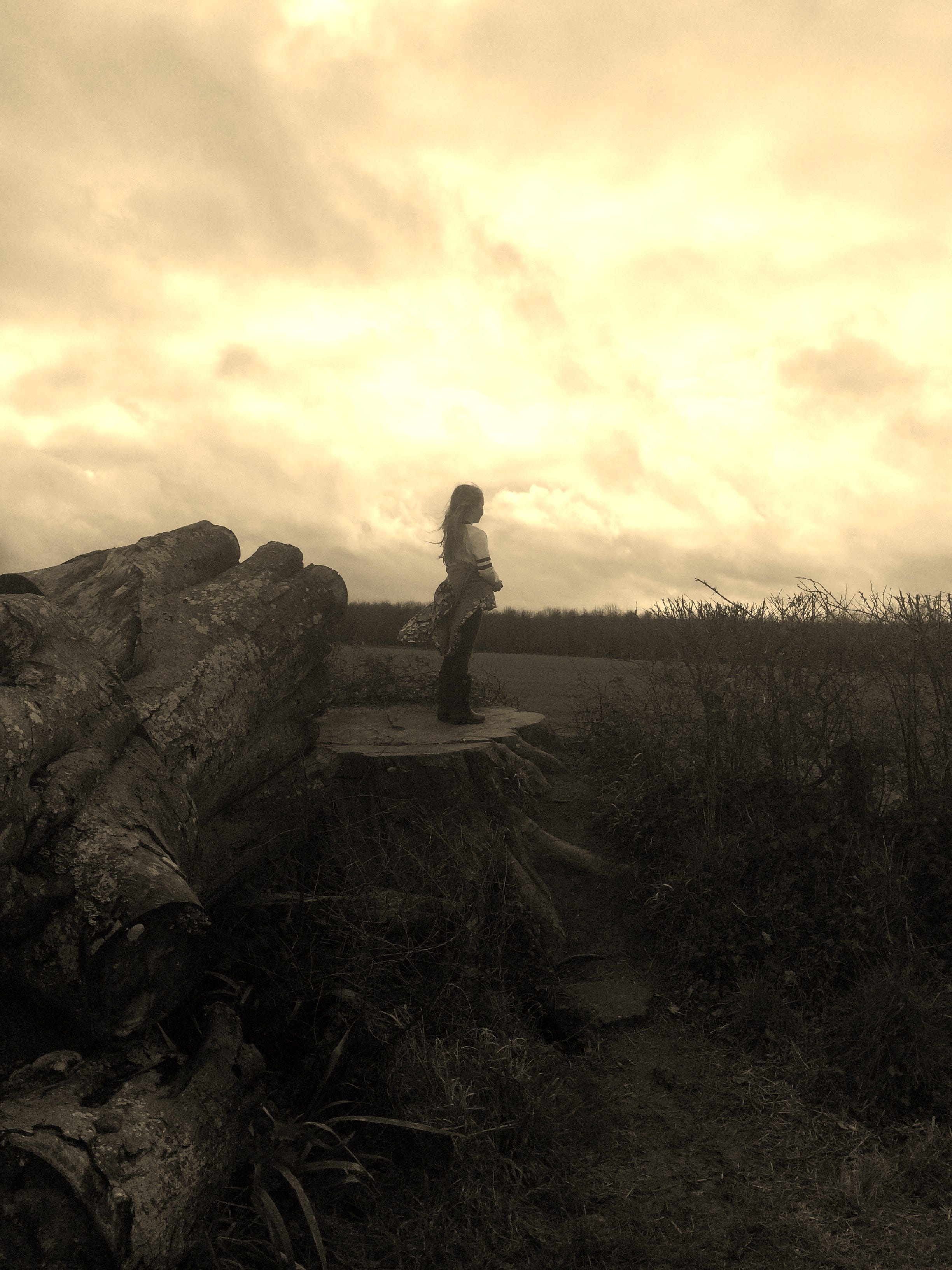
Because, as Rudd reminds us:
“Freethinkers who find their own sense of style are not really concerned with fitting in. Their only concern is to free more freethinkers! Such freedom is truly contagious. Thus such people inherit a powerful mission in the world even though they may not see it that way.”