

The System Doesn’t End at the School Gate
Deschooling Ourselves and Reclaiming Inner Authority in Parenting

The Alchemy of the Early Years
There is a particular quality to the early years of parenting that feels almost otherworldly.
Alongside the overwhelm and exhaustion, something instinctive and primal is at play. When I think back to those first months with my babies, I remember the way my nervous system reorganised itself around them. Their smallest expressions — a flicker of eye contact, a new sound, the curl of their fingers — lit me up from the inside. The attachment bond felt biochemical, almost alchemical. It pulled me into presence whether I intended it or not.
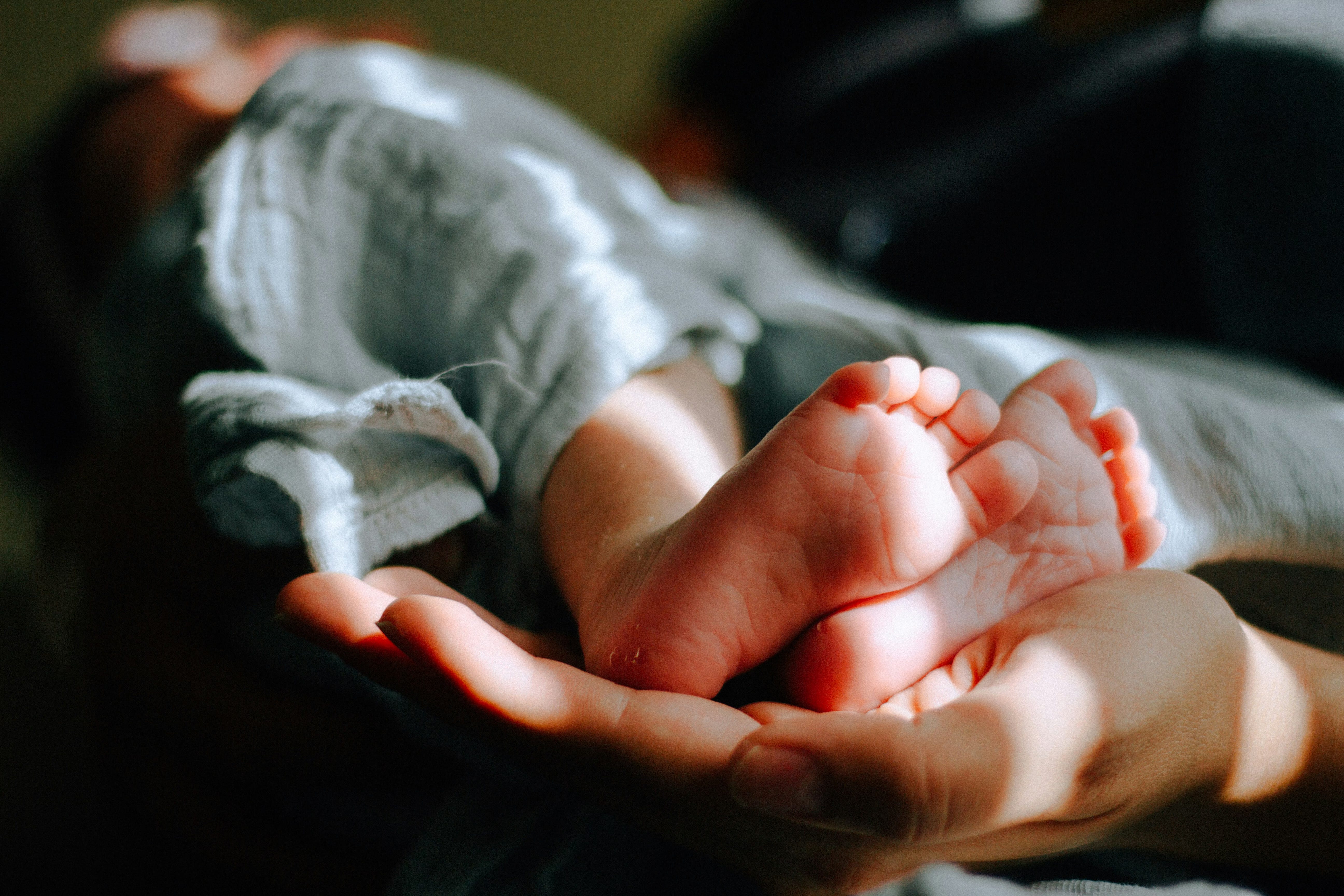
Time slowed. The outside world softened. My body knew what to do: hold, feed, soothe, respond. There was a deep animal intelligence guiding the rhythm of our days. Parenting did not feel strategic. It felt immersive.
As babies become toddlers, some of that instinctive rhythm remains. We move from pure tending to navigating safety, boundaries, and those first movements toward independence. There is still wonder. Still play. Still the sense that development is unfolding organically before our eyes.
In those early years, most of us trust ourselves more than we realise.
And then, gradually, something shifts.
When the Noise Gets Louder
The pressure rarely arrives dramatically. It accumulates.
At eighteen months, I remember feeling irrationally frustrated on the days my daughter resisted her nap. I “knew” — from everything I had read — that she absolutely still needed to sleep. If she didn’t, was I harming her development? Was I doing something wrong? My professional knowledge, once grounding, became a measuring stick I could fail against.
At two, with the word “terrible” so casually attached to that age, I found myself searching for advice about tantrums. I can see now that this was not because anything was unusual, but because I felt I should be managing them better. Surely I could optimise this stage — find a way to get it “right.”
By three, the conversation widened. Questions about socialisation surfaced more frequently. Was she mixing with enough children? Was she learning to share? Was she exposed to enough structure? Even when nursery felt like a gentle, age-appropriate step for us, I noticed how quickly the language shifted toward preparation, as though this season were already a rehearsal for something else.
By four, something subtler — and heavier — crept in. The school narrative was no longer a distant horizon; it was assumed, as it is for most families. “Is she excited to start school?” people would ask, as though attendance were inevitable. It felt as though a track had already been laid beneath us, mapped out long before we had consciously chosen our direction. The academic undertones followed closely behind. Was she doing letters? Could she write her name? Comparison slipped in quietly. I noticed the subtle relief when her language seemed advanced, as though that granted me legitimacy — proof that I was doing something right.
This is how conditioning works. Not as a single directive, but as a field you slowly breathe in.
We download milestone apps. We scroll curated childhoods. We consume expert advice — some thoughtful and grounded, some produced by industries that depend on parental uncertainty. In the absence of a village, we turn to the market.
And something subtle begins to happen in the nervous system. Ease morphs into urgency. Curiosity becomes checking; trust becomes scanning. We shift from following the child to managing the child.
It took me time to realise that whether a child has never stepped into a classroom or has been withdrawn from one, the deeper work remains the same. The system can still live inside the nervous system of the parent. The timelines, the measuring, the fear of “behind” — these are not neutral thoughts. They are internalised reflexes.
Deschooling is not just structural. It is neurological and relational — an unwinding that has to happen within us.

The Machinery of Urgency
Modern parenting culture runs on urgency. The messaging is constant: intervene early, don’t fall behind, stay ahead, optimise potential, don’t miss the window.
On the surface, this appears to be care. Beneath it, it often functions as preparation — children as future workers within systems that prize productivity, parents as managers of outcomes in cultures that reward visible performance.
When urgency dominates, instinct erodes and anxiety increases. There is a healthy kind of parental vigilance that keeps a toddler from running into traffic. But there is another kind — the one that spirals when a four-year-old melts down after school and we interpret it as something to correct rather than a sign of nervous system overwhelm.
Instead of wondering what the day demanded of them, we reach for strategies to stop the behaviour. Instead of seeing struggle as contextual, we locate the problem inside the child — or inside ourselves.
Management systems tend to individualise difficulty because that serves them. Living systems recognise that struggle is part of growth and always occurs in relationship.
Looking back, I can see how easily I slipped into subtle perfectionism — the unconscious desire to have the “perfect child” as proof that I knew what I was doing. That thread runs deep culturally. Good parenting becomes equated with visible outcomes: a consistently regulated child, a high-achieving child, a compliant child.
But compliance is not the same thing as wellbeing.
Conditioning and the Loss of Wildness
Much of this conditioning began long before we had language for it.
Modern schooling systems are remarkably efficient at homogenising intelligence. Layer upon layer of identical information, delivered in identical ways, produces neurologically similar patterns of thinking. We learn not only what to think, but how to think — what is rewarded, what is corrected, what is considered success.
This is not a moral critique of teachers. It is a structural observation.
When individuality is treated as disruption, self-editing becomes a survival skill. As children, we learn to adjust ourselves to fit the structure around us. We learn when to raise our hands, when to stay quiet, how to perform understanding, how to meet expectations. Over time, those adjustments harden into habits. We internalise timelines. We internalise comparison. We internalise the belief that progress must be visible to be valid. Urgency begins to feel like responsibility.
By the time we reach adulthood, much of this feels normal. It settles into the body as common sense.
Then we become parents.
Without intending to, we begin to evaluate our children through the very structures that shaped us. We measure because we were measured. We anticipate judgement because we were judged. We feel relief at visible progress because progress once secured our own sense of safety.
Patience — our natural ground — gives way to impatience rooted in fear.
And beneath all of this, there can be grief. Grief that joy has become performance. That presence has become preparation. That childhood has become a résumé.
Reclaiming Inner Authority
For me, reclaiming authority unfolded gradually.
In my early thirties — before I became a parent — mindfulness and yoga were my first doorway into questioning the dominance of the mind. Through meditation and embodied practice, I began to experience that I was not my thoughts. There were small gaps in the constant commentary. Presence lived in the body, not in analysis.
But at that stage, the shift was largely experiential. I could observe the mind, yet I did not fully understand how deeply it was shaping my decisions — particularly once I entered motherhood.
A few years later, exploring my own Human Design and the contemplative framework of the Gene Keys added structure to what I had sensed. In Human Design, each of us has areas of our energetic blueprint that are especially sensitive to external pressure. These are known as open centres — places where conditioning tends to land most strongly.
When I looked at my chart, I saw that the centres associated with mental pressure and urgency were completely open. It suddenly made sense why I felt compelled to think everything through, to answer every question, to solve every potential problem in advance. It made sense that I absorbed cultural anxiety about time and “falling behind” so easily. It even explained why I sometimes clung to what felt familiar, even when it exhausted me.
This understanding did not excuse my behaviour, but it did contextualise it. Mindfulness had shown me that I did not have to believe every thought. The Gene Keys revealed the collective patterns of thinking I had absorbed. Human Design showed me where those patterns were most likely to override my authority — and what to trust instead.
As a Generator, my design works best when I respond from the body rather than initiate from mental planning. I had been conditioned to believe that thinking precedes action, that the mind drives and the body follows. Learning to wait for a bodily sense of “yes” or “no” was not about rejecting the mind; it was about reordering authority. The mind became an advisor rather than the driver.

That does not mean the conditioning disappeared.
Even now, I can feel how quickly my system reaches for familiar anxieties — worrying about academic timelines, scanning for signs of progress, trying to control behaviour when uncertainty creeps in. Intellectually, I know better. But conditioning does not live only in the intellect. It settles into the body.
If the body keeps the score, then it also keeps the imprint.
For me, this is where the work continues. Not in trying to think differently, but in learning to pause long enough to access something deeper than the reflex to manage. The sacral response — that steady, embodied yes or no — sits beneath the emotional waves, beneath the urgency that rises with them. Often it is buried under years of bodily submission to external expectations and systems that prioritise compliance over nervous system safety. But when I slow down enough, it is still there.
Parenting changed when those threads came together — contemplative awareness, embodied grounding, and structural insight. I stopped outsourcing so quickly because I trusted my internal signals more.
Understanding my child’s unique design further reduced comparison. Individual readiness mattered more than milestones, regulation more than performance. I could see how my own sensitivity to urgency amplified her emotions, and how her intensity triggered my reflex to manage. The work was not about fixing her. It was about noticing what was being activated in me.
No generic parenting book could map that dynamic. But awareness could soften it.
Deschooling Ourselves
We often speak about deschooling children, but perhaps the deeper invitation is to deschool ourselves.
To notice where urgency still drives us. To recognise where comparison tightens the chest. To question the reflex that equates visible progress with safety.
Deschooling, at its core, is deconditioning. It is the slow unwinding of internalised authority and the return of discernment.
Learning to distinguish fear from intuition is subtle work. Fear tends to arrive with urgency and catastrophic projection. Intuition feels steadier. It allows timing. It does not demand immediate correction.
Authority returns through small shifts: pausing before intervening, asking whether we are responding to a genuine need or a system expectation, seeking information without surrendering discernment.
Children are not linear projects moving along a fixed track. And often, when we feel resistance as parents, it is not a sign that we are failing but a sign that something inside us is ready to be unlearned.
The system does not end at the school gate. But neither does our capacity to step outside of it.

Authority belongs closer to home than we were taught.
We were never meant to parent in constant urgency, comparison, and control. We were meant to respond to the living child in front of us — and in doing so, to reclaim something instinctive and intelligent within ourselves.
This is the thread I keep exploring here — how we relearn to trust what our bodies, our children, and our deeper instincts have known all along.
💬 Join the Conversation
If this piece stirred something — relief, grief, recognition — I’d love to hear.
Have you felt the shift from instinct to urgency in your own parenting? Or noticed how quickly comparison and pressure creep in?
Your reflections often help other parents realise they’re not alone — and that what they’re sensing isn’t irrational.
🔄 Share This Piece
If this article resonated, please consider sharing it.
Many thoughtful, capable parents are quietly questioning whether something about modern parenting feels off — but struggling to name why.
This perspective might give them language for what they’ve been sensing beneath the noise.
🌱 1:1 Sessions: Exploring Your Design — or Your Child’s
If this reflection felt personal — if you recognise the mental pressure, the urgency, the comparison — I offer 1:1 sessions rooted in Human Design and developmental insight.
These conversations are grounded and practical. We explore your energy, your decision-making, your conditioning patterns, and your child’s unique design — helping you parent from steadiness rather than fear.
This isn’t about fixing your child. It’s about restoring clarity, confidence, and coherence in you.
📚 You Might Also Enjoy
If this is part of a bigger shift for you, you may also resonate with:


💌 Stay Connected
If these reflections resonate, you can subscribe to receive weekly writing on conscious parenting, natural development, and trusting what you sense — even when it doesn’t fit the expected path.
“But compliance is not the same thing as wellbeing.” This is my favorite line in the entire piece. It’s the quiet part being said out loud.
I absolutely love the work you are doing here, and I've thought recently about how human design can impact our kids' learning styles. I find myself getting pulled back into the "system" thinking from time to time, and it makes so much sense to me that it's part of my human design to do so. I know I have a lot of open centers as well.